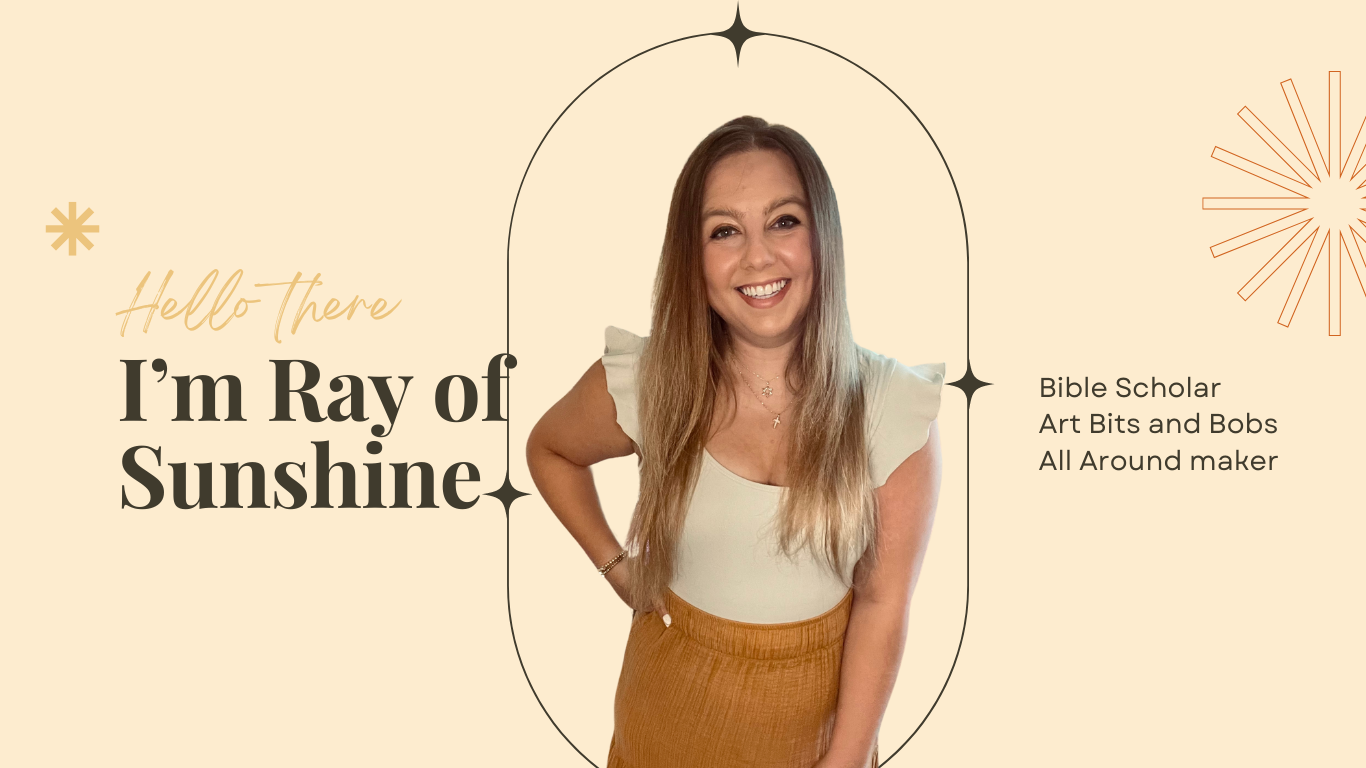


We have officially finished one month in our Chronological Bible Reading plan for 2024! How did you do? Before we dive into the readings, I wanted to take a moment to mention a few things to keep in mind as you journey through this reading plan.
- Take your time! In order to get the most out of Bible reading you cannot rush through it or have the intention of doing it just to check it off your to-do list.
- It is ok to play catch up! We are not perfect and may miss a day or a week. One of the features of this plan is that it allows for time to catch up when life happens. It is more important to be intentional and get back in the saddle when reading your Bible. I myself have played catch up this month as well!
- If you are using the journal, there may be times when you have a section in there that you don’t have anything you want to add. Feel free to leave those areas blank. Sometimes we read things in the Bible and we don’t jump to, “how can I apply this to my life?” Not everything needs an application and not everything will stand out to you. By doing this you also are leaving space to see how you grow in your studies when you come to that passage later on and find new things to add.
- If you are new here and would like to join, please refer to the post entitled, “2024 Chronological Bible Reading Plan” in order to get a free printable of the plan. The link for the journal is also located on that page if you wish to purchase. For more information regarding the journal check out my Instagram page @rayofsunshine.art.
In January we covered Genesis, Job, and started into Exodus. We will cover Exodus more in depth in the February Recap.
Genesis
Genesis, the beginning, the creation, the first people, and the fall. The Greek word, Ktisis, meaning establishing; the act of founding. In the first couple chapters we read in awe as God constructs the world in 6 days and establishes the first Sabbath. We know that when He created the world it was good and it was not until man decided to want to know more than what was good for him that our sinful nature slipped out and we began to stumble. We follow the first generations of people until we get to Noah. Through Noah the first covenant will be established between God and man. The world had turned so evil that God was ready to erase it, but he established a remnant with Noah as Noah followed God’s commandments, even when it seemed crazy to him. God saves His chosen people- the ones who walk in His ways and follow His commands. If you need a reminder of why to trust God, here is a song by Colton Dixon called, “Build a Boat.”
Then the second covenant is established that God will never flood the earth again. We continue to read as once again people get too big for their britches by building the Tower of Babel, only for God to put them back in their place by confusing the languages. Then enters Abraham and God establishes a covenant with him. We will see a pattern of people taking matters into their own hands instead of fully trusting in God. We see this with Sarah as she believes she will not have children and encourage Abraham to lay with Hager. Hager will birth Ishmael and later Sarah will birth Isaac. We see Lot’s daughters taking matters into their own hands by laying with him to preserve their family line. Once Isaac was established, God tests Abraham by having him sacrifice the boy. Abraham was distraught at losing his son, but because he had faith in God he followed the plan. In the end he was rewarded. We then follow Esau and Jacob’s brotherhood and see Jacob struggle to obtain his wife Rachel. Due to changes in birthrights with Jacob and Esau, it is believed that Jacob had to marry both Leah and Rachel in order to bear the 12 children, whom would become the 12 tribes of Israel. We revisit what happens when you take matters into your own hands in the story of Dinah and how Simeon and Levi murdered the men. We then turn our attention to Joseph and follow his brothers hatred towards him. What seems like a curse of Joseph being sold into slavery, turns into a big blessings to the whole family. Joseph becomes the redeemer of the family as he works his way into power within Egypt and is able to navigate the famine. All while still trusting in God and giving Him the glory. We end Genesis with the blessing of Ephraim and Manasseh, the sons of Joseph as they become counted amongst the children of Jacob, now Israel, in order for Joseph to receive firstborn portions of his father’s blessing.
Job
In full transparency, I struggle with Job. The lengthy monologues can be hard to digest and understand. I stumbled through the first few chapters in my ESV Bible before I switched to my copy of, “The Way: The Living Bible Illustrated.” This is an older one, but it was designed for teens in the 60’s and 70’s. It uses language that is easier to grasps concepts as it is a thought for though translation instead of a word for word translation. The second big help I found when studying Job was the following video from Bible Project on Youtube. Click below to watch it for yourself.
With these two resources in hand, I gleaned a better understanding of Job. Here is the breakdown. We start off knowing that Satan is testing Job. We know Job to be a righteous man who did not sin with his lips or charge God with wrong. Job even states, “Naked I came from my mother’s womb, and naked shall I return. The Lord gave, and the Lord has taken away; blessed be the name of the Lord.” (Job 1:21) This shows that he knows that all things happen according to the Lord. We then turn to a lengthy back and forth between Job’s friends as they tell their opinions on what Job has done wrong in order to explain his suffering. We follow Job as he believes there is no arbiter, blames the Lord while having hope, questions where he should place his hope, and lands in a place of miserable acceptance. A final friend appears and decides that it is his turn to speak as he can teach Job wisdom. He explains the suffering as a warning to build character, something that is often accompanied with these types of tests. Then God appears asking, “Where were you when I laid the foundation of the earth? Tell me, if you have understanding.” (Job 38:4) He then explains how He runs the world, reminding Job, his friends, and us that we do not know all that we think we do. Job is then humbled and responds with, “Behold, I am of small account; what shall I answer you? I lay my hand on my mouth. I have spoken once, and I will not answer; twice, but I will proceed no further.” (Job 40:3-5) This leads us into some final takeaways from Job. We live in a world that is not designed to eliminate suffering, God honors Job’s struggle, honesty, and responding in prayer. While we are not given an account on to why Job suffered, other than the test placed by Satan, we can glean that we should respond in prayer to things we do not understand and remain hopeful in God, even in tragedy.
Invite
Thank you for taking some time to review with me this months reading! I hope these thoughts were helpful. As a reminder I am just a human and do not speak for God, so my words are in no way perfect. Please share your thoughts on the readings in the comments below so the community can engage in discussion. Just keep it respectful and kind.
 Ray of Sunshine. art
Leave a comment